
Our Community
New Albany's Economic Development Story
The City of New Albany is a strategically planned community of approximately 11,000 residents located approximately 20 minutes northeast of downtown Columbus, Ohio. New Albany strives to offer world-class amenities for its residents and employees and has worked intentionally to develop and diversify a strong tax base to support public works that align with four key planning principles:
- Health and Wellness
- Arts and Culture
- Lifelong Learning
- Environmental Sustainability
This economic development activity has resulted in the 9,000+ acre New Albany International Business Park. The City’s Community Development Department has worked for over 25 years to attract more than $83 billion in private investment, yielding 41 million square feet of development and creating approximately 29,000 jobs. Companies like Google, Meta, Microsoft, AWS, Amgen, Abercrombie & Fitch, Bath & Body Works, Hims&Hers, Pharmavite, Intel’s $28 billion Ohio One campus, and more are located in New Albany.
Under the authority of the Ohio Revised Code, more than 500 Ohio cities and villages impose municipal income taxes ranging from 0.5% to 2.75%. These local taxes are withheld by employers in addition to state taxes. The proceeds from New Albany’s 2% municipal income tax account for approximately 80% of the community’s general fund.
Business Park Statistics

Growing Industries
To create a stable and diversified income tax base, the City has worked intentionally to attract six high-growth industry clusters:
- Health and Life Sciences
- High-Tech Manufacturing and Logistics
- Personal Care and Beauty Campus
- Corporate Office and R&D
- Semiconductor Industry
- Information Technology and Mission Critical
The Information Technology and Mission Critical cluster includes data centers and AI operations centers. The first data center investment in New Albany occurred in 2010. Since then, approximately 15 information technology companies have constructed 40 facilities within the community, with 28 additional facilities announced or under construction. Information Technology and Mission Critical companies in New Albany include:














Strategic Plan
Businesses consistently choose to invest in New Albany due to the community’s strategic plan, which aligns community development with resident input. The latest overhaul of the strategic plan engaged more than 1,000 residents and repeatedly convened a 41-person steering committee to represent hundreds of online survey responses and input from dozens of in-person meetings. New Albany’s “one-stop shop” Community Development Department, which includes planning, zoning, engineering, economic development, and building disciplines under one roof, carries forth development as contemplated in the strategic plan.
The City uses the strategic plan to guide the capital planning process for public infrastructure design and construction. This includes roads, water and sewer lines, fiber-optic connectivity, and streetscape infrastructure. The City of Columbus is consistently a part of water and sewer system planning, as those utilities are provided to New Albany businesses on a contract basis.
Utility providers like American Electric Power (AEP) and The Energy Cooperative (TEC) have also made proactive investments in and around the New Albany International Business Park, establishing many of the businesses throughout as key accounts.



School Impact
Finally, the City has preapproved school compensation agreements in place. We have standardized revenue generation formulas for each industry cluster, thereby ensuring that revenue from new development projects is predictable for both the City and the school districts.




Community Partnerships
This alignment among local stakeholders on tax revenue allows the City to move as quickly as possible under state statute. Working alongside economic development partners like OneColumbus, JobsOhio, and the Ohio Department of Development, the City can attract and retain valuable investment for the city, region, state, and country.




Frequently Asked Questions
Why has New Albany intentionally worked to attract data centers?
Data centers add value to the community by diversifying and increasing the tax base and supporting and participating in community initiatives.
Diversified Investment
Data centers are one piece of New Albany’s diversified economic development strategy, which includes five other industry clusters. Development in those other clusters has resulted in job-dense manufacturing, corporate office, or health and life sciences investment throughout the community. Data centers support the IT necessities of these other businesses, making them a critical “economic base” operation insulated from industry-specific volatility.
Increased Tax Base
As established in more detail throughout this webpage, data center development has significantly increased the City’s tax base through income and property taxes, PILOT payments, contributions to the New Community Authority, and more. As development has continued in New Albany, the City has observed hyperscaler data centers acquiring large tracts of agricultural land at significantly higher prices. These purchases result in increased land valuations, generating greater property tax revenue for all three school districts and both career technical schools in New Albany.
Growth Catalysts for Other Sectors
The extraordinary concentration of capital associated with data center investments has enabled the City to fund critical infrastructure for other industries. For example, Meta began its growth in New Albany on a now 600+ acre site south of SR-161. This area had been a part of the City’s growth corridor since the 2008 update to the New Albany Strategic Plan, but New Albany lacked the funding to bring infrastructure to the region. The City was able to utilize revenue streams from the Meta project to support the debt service for an expansion of road, water, and sewer along the Beech Road corridor, opening more than 800 acres of ground for economic development purposes. In subsequent years, acreage from those “unlocked” tracts of land was acquired by Amgen, a global health and life sciences manufacturer that researches and produces cancer medications in New Albany.
Community Improvement
Data center companies have proven to be excellent community partners in New Albany. More information about specific data center contributions and New Albany’s community participation requirements can be found throughout several sections below.
National Security
It is no secret that several data center companies in New Albany have contracts with various federal entities responsible for our national defense. In addition to providing digital services directly for the American military and its contractors, data centers also provide critical digital infrastructure for the modern American economy, ensuring resilience against natural disasters and combatting foreign intelligence threats. This is one reason that most data centers go out of their way to hire veterans who are used to 24/7 critical operations, high-security systems, and network cryptology.
Frequently Asked Questions
What role do data centers play in the community once they are built?
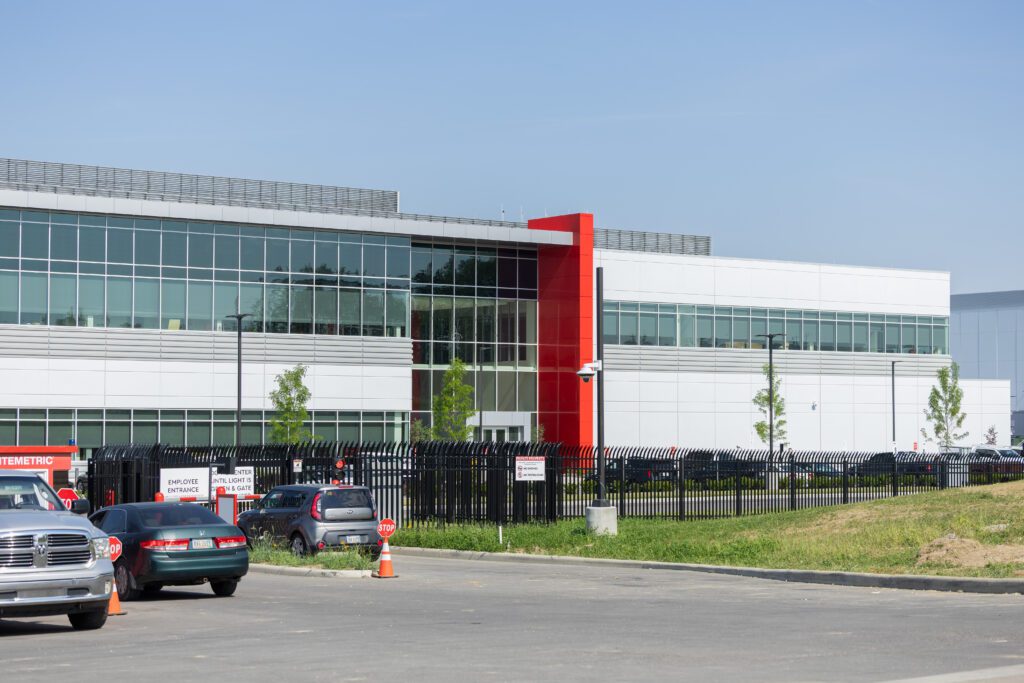
In New Albany, data centers have proven to be strong partners to the City and a variety of nonprofit organizations. As a condition of most of the City’s tax abatement agreements, businesses receiving incentives are required to submit an annual community participation statement and become members of the New Albany Chamber of Commerce. Companies also regularly partner with The New Albany Community Foundation or nonprofits like Healthy New Albany to volunteer time or make donations to causes that support New Albany’s four key planning principles: Health and Wellness, Arts and Culture, Lifelong Learning, and Environmental Sustainability.
Some data centers have sponsored community grants or educational initiatives like STEM courses and Girls Tech Day. In one instance, a data center company provided an entire school district with 1-to-1 electronic devices, enabling education to continue throughout the COVID-19 pandemic. Data center operators continue to raise the bar for corporate community participation in New Albany; QTS, a data center company, recently won the City’s “business volunteer of the year” award.
Frequently Asked Questions
What has New Albany learned while working with data centers?
New Albany has learned many lessons that are mostly applicable to other local governments contemplating a data center project.
Ensure availability of inspectors and plan reviewers
Data center building plans often require industry-specific expertise to review efficiently. Upskilling existing City plan review staff or working to attract experienced talent is critical to working at the pace of the data center industry.
Create fee structures for building plan review and permitting
Given the complexity of data center building plans, there is a high possibility of repeated submissions and reviews. A reasonable fee structure is necessary to ensure that developers appropriately value staff hours and are prepared for every meeting.
Create a policy for fiber and wire installation in (or by establishing) utility corridors
Data center development brings redundant fiber infrastructure to public right of way. Other “prospectors” seeking opportunity along adjacent site frontage may apply to use the same right of way. Communities should prepare policies that prevent utility corridors from clogging with unreasonable or unending construction.
Collect company contacts to share with the public, media, and prospecting companies
Data center projects sometimes carry high public profiles. New Albany frequently receives questions or comments from the public that are more appropriate for direct communication with the company or construction contractor. It is important to have the right company contacts prepared to answer everything from media requests to business development cold calls.
Proactive communication with the public
Webpages like this one are important to keep members of the public informed, both inside and outside New Albany. A working understanding of data centers across the residential population enables higher level engagement in public meetings and enhances the quality of discussions with companies and City staff.
Site data center projects intentionally
Data centers generally employ fewer people than other commercial uses, making them a healthy addition to an already mature, job-dense region from a traffic standpoint. For example, more than 12 companies employ approximately 4,000 people in New Albany’s Personal Care and Beauty Campus near the geographic center of the New Albany International Business Park. The resulting daily traffic patterns in and around this area are manageable, but if all the adjacent land were to develop into similar advanced manufacturing uses, the existing five-lane roadways could be overwhelmed by commuter and logistics traffic at rush hour.
Preemptively negotiate development agreements that require behind-the-meter power generation infrastructure be owned by the third party rather than directly by the end user
When owned and operated by a third-party provider, this infrastructure is taxed as Public Utility Tangible Personal Property (PUPP) at full millage rates, establishing significant and consistent revenue streams for communities, schools, townships, and EMS services. Tangible personal property tax is not assessed when power generation infrastructure is owned and operated by the end user.